
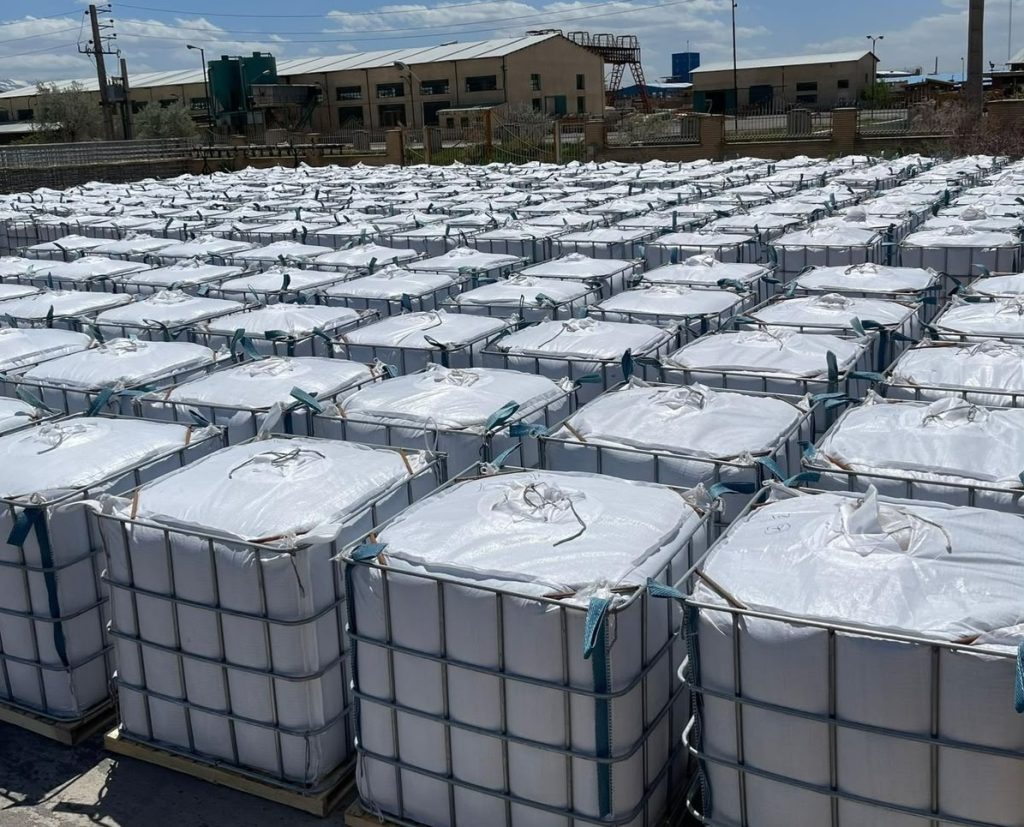
Bitumen Supplier in Brazil from Turkey
Raha Oil supplies bitumen to Brazil for importers, asphalt plants, road construction companies, and trading houses that need a dependable bitumen export company with a track record in international trade. We load asphalt binder from Turkish ports and ship it to major Brazilian terminals under clear CFR and CIF terms, with full export documentation prepared for customs clearance on arrival. Whether you are sourcing for a single trial shipment or planning recurring deliveries for an ongoing paving program, our team works directly with you on grade selection, packing, and port logistics.
We are based in Turkey and export internationally — we are not a Brazilian domestic supplier. This page explains exactly how the export process works, from grade selection to the documents you will receive with each shipment, so a Brazilian buyer evaluating a Turkish bitumen exporter for the first time knows what to expect at every step.
Quick Answer: Best Way to Import Bitumen into Brazil from Turkey
The most reliable way to import bitumen into Brazil from Turkey is to work with an exporter who quotes on a CFR or CIF basis to your destination port, confirms the CAP-equivalent grade before shipment, and provides full export documentation (Commercial Invoice, Packing List, Certificate of Origin, Bill of Lading, MSDS, and TDS) in advance of loading. Buyers typically choose packing — steel drums, jumbo bags, or bulk — based on their unloading equipment, then coordinate shipping through Mersin, Iskenderun, or another Turkish port to Santos, Paranagua, or another Brazilian terminal. A trial order is a practical first step for new importers before scaling to larger volumes.
Ready to request a quote? Skip to the quotation section or keep reading for grade comparisons, shipping routes, and documentation details.
Why Brazil Imports Bitumen
Brazil imports bitumen because domestic refining output does not consistently cover national demand, particularly in regions far from the country's refineries during peak paving season. This gap is filled by overseas suppliers who can offer stable grade quality and supply continuity regardless of regional refinery output swings.
Brazil's road network is one of the largest in Latin America, and a significant share of it remains unpaved or in need of resurfacing. Federal highway maintenance overseen by DNIT (Departamento Nacional de Infraestrutura de Transportes), along with state-level paving programs, industrial flooring, and airport and port infrastructure work, all draw on asphalt binder supply that fluctuates with construction activity and seasonal weather patterns. When local refinery output tightens — often during the wet season or periods of high domestic demand — asphalt plants and contractors look outward.
Brazilian buyers importing from overseas typically do so for one or more of these reasons:
- Supply continuity — avoiding production delays tied to a single domestic refinery's output schedule
- Price stability — diversifying away from domestic price swings tied to crude allocation
- Grade availability — sourcing specific penetration grades or PMB that may not always be readily available locally
- Tender requirements — some public and private tenders specify grades more easily matched through international sourcing
Brazilian buyers also tend to expect a higher level of documentation rigor than some other markets — clear CAP-to-penetration grade mapping, complete export paperwork, and realistic shipping timelines communicated up front. That expectation shapes how we structure every quotation and shipment for this market.
Climate also plays a role in grade selection. Brazil spans tropical, subtropical, and semi-arid regions — a paving project in the hot, humid Northeast has different rutting resistance needs than one in the cooler South, which is part of why DNIT specifications allow for a range of CAP grades rather than a single national standard. Coastal logistics hubs near Santos and Paranagua see some of the highest import volumes, simply because they sit close to the country's largest industrial and construction markets.
If you're comparing suppliers for an upcoming highway rehabilitation or paving tender, our team can walk through grade requirements with you before you commit to a quotation.
Why Buy Turkish Bitumen?
Buyers choose Turkish bitumen exporters for a combination of geographic positioning, port flexibility, and export experience that supports consistent delivery to overseas markets, including Brazil. Turkey sits at a logistics crossroads between the Mediterranean and onward Atlantic shipping lanes, which keeps routing options open rather than dependent on a single port or carrier.
A few practical reasons Brazilian buyers work with Turkish suppliers:
- Multiple loading ports — Mersin, Iskenderun, Izmir/Aliaga, and Ambarli give flexibility on routing and vessel scheduling rather than relying on one terminal
- Established Mediterranean shipping routes — regular container and breakbulk service to South America supports predictable scheduling
- Flexible packing — drums, jumbo bags, or bulk, matched to your unloading capability rather than a one-size-fits-all format
- Documentation discipline — export paperwork prepared to a consistent standard that Brazilian customs brokers can process without back-and-forth
- Reliable supply — sourcing flexibility across multiple grades reduces the risk of a single bottleneck holding up your order
None of this replaces doing your own due diligence on any supplier — but it's the combination of port access, packing flexibility, and documentation consistency that tends to matter most to Brazilian importers comparing options.
Bitumen Grades for Brazil
Grade selection depends on your project specification, local climate, asphalt plant requirements, and any tender documentation you are working from. Below is an overview of the grades we commonly supply for the Brazilian market.
Bitumen 50/70
A widely used penetration grade for general road paving and asphalt mix production, suited to a broad range of climate conditions. Roughly corresponds to CAP 50/70 in Brazilian terminology.
Bitumen 60/70
One of the most requested grades internationally, used in road construction, surface dressing, and asphalt concrete production. Softer than 50/70, with broad applicability across standard paving projects.
Bitumen 40/50
A harder penetration grade suited to higher-temperature climates and heavier traffic loads, generally aligned with CAP 40/50 specifications.
CAP 50/70
The Brazilian classification most commonly specified in DNIT and state-level tenders for standard asphalt paving works.
CAP 40/50
An intermediate grade between CAP 30/45 and CAP 50/70, used depending on regional specification, climate, and traffic conditions.
CAP 30/45
A harder penetration grade used where greater stiffness is required, such as heavier traffic loads or warmer climate zones with higher rutting risk.
Oxidized Bitumen
Used for industrial and waterproofing applications rather than road paving. Available in standard grades for export.
PMB / Modified Bitumen
Polymer modified bitumen for projects requiring higher elasticity and resistance to deformation, subject to specification and order quantity.
If you already have a tender or technical specification, send it to our team and we will confirm which grade matches your requirement before quoting.
CAP vs Penetration Grade: How They Compare
CAP grades are Brazil's domestic classification system for asphalt binder, while penetration grades (such as 50/70 or 60/70) are the international standard used by most exporters — the two systems describe equivalent stiffness ranges but are labeled differently. Brazilian buyers working from a DNIT or state tender usually see CAP terminology, while suppliers outside Brazil typically quote in penetration grade. Knowing how they line up avoids confusion when comparing quotations.
| Brazilian CAP Grade | Equivalent Penetration Grade | Typical Use |
|---|---|---|
| CAP 30/45 | Bitumen 30/45 (harder grade) | Heavy traffic, warmer climates, higher stiffness needs |
| CAP 40/50 | Bitumen 40/50 | Intermediate stiffness, moderate-to-heavy traffic roads |
| CAP 50/70 | Bitumen 50/70 | General-purpose paving, broad climate suitability |
| — | Bitumen 60/70 | Softer general paving, surface dressing, asphalt concrete |
If your tender lists a CAP grade and you are unsure which penetration grade to request in a quotation, send us the specification page and we will confirm the match before you order.
Bitumen 50/70 and 60/70 for Brazil
These two grades are the most frequently requested by Brazilian buyers, and the difference between them is straightforward. Bitumen 50/70 has a slightly harder penetration value, making it suitable for warmer climates and higher-traffic roads where more rigidity is needed. Bitumen 60/70 is somewhat softer and more flexible, commonly used in a wider range of standard paving applications.
Many asphalt plants in Brazil already specify one of these two grades in their mix design, so confirming which one your project calls for is usually the first step before requesting a quotation. Our team can also advise based on your local CAP equivalent if you are working from a Brazilian specification rather than a penetration grade.
How to Import Bitumen into Brazil from Turkey
Importing bitumen from Turkey into Brazil generally follows eight stages, from initial inquiry through to delivery at your facility. Understanding the sequence helps first-time importers plan lead time and avoid last-minute documentation gaps.
- Inquiry — share your general requirement (approximate grade, volume, and destination region) so we can scope the order
- Grade selection — confirm the exact penetration grade or CAP equivalent against your tender or mix design
- Quotation — receive a CFR or CIF quote to your named Brazilian port, with packing and freight itemized
- Packing — finalize drums, jumbo bags, or bulk based on your unloading equipment and storage
- Inspection — arrange SGS or BV inspection before loading, if required for your import process
- Shipping — vessel booking and loading from the agreed Turkish port, with Bill of Lading issued on departure
- Customs clearance — your broker clears the shipment in Brazil using the Commercial Invoice, Packing List, Certificate of Origin, and Bill of Lading
- Delivery — cargo is released from port and transported to your asphalt plant or storage facility
For a first import, building in extra time around the inspection and customs clearance stages is sensible, since these depend on third-party scheduling outside our direct control.
Common Mistakes When Buying Bitumen for Import
The most common mistakes Brazilian buyers make when importing bitumen are ordering the wrong grade equivalent, underestimating transit time, and finalizing packing after booking instead of before. Each is avoidable with a short amount of upfront confirmation.
- Assuming CAP and penetration grades are interchangeable without checking — always confirm the specific equivalency against the table above rather than assuming a direct match
- Ordering on price alone without confirming documentation — a lower quote that lacks complete export paperwork can cost more in customs delays than it saves
- Leaving packing decisions until after booking — drums, jumbo bags, and bulk load differently, so packing should be confirmed before the vessel is booked, not after
- Underestimating total transit time — factoring in only ocean transit and forgetting loading, customs, and inland transport leads to project delays
- Not requesting a TDS before ordering — technical data should be reviewed against your specification before committing to a shipment, not after it arrives
Factors Affecting Bitumen Prices for Brazil
Bitumen prices for export to Brazil are shaped primarily by crude oil and feedstock costs, freight rates on the Mediterranean–South America route, grade and packing choice, and order volume. Because these factors shift independently of one another, published "fixed" prices are rarely accurate for more than a short window.
- Crude oil and feedstock costs — bitumen is a refinery byproduct, so base pricing tracks broader crude market movements
- Freight and bunker costs — container and bulk freight rates on the Turkey–Brazil corridor fluctuate with fuel surcharges and vessel availability
- Grade selection — harder grades (e.g., CAP 30/45) and modified products like PMB typically carry different production costs than standard 50/70 or 60/70
- Packing format — drums add packaging cost per ton compared with bulk, while jumbo bags sit in between
- Order volume — larger volumes generally support better per-ton pricing due to fixed cost efficiencies in loading and freight
- Seasonal demand — peak construction season in Brazil and tight vessel capacity can both push freight and grade availability in the same direction
Because of how often these inputs move, we don't publish fixed prices — every quotation reflects current market conditions at the time of request. Request a current quote with your grade, quantity, and destination port for an accurate figure.
Packing Options
We offer flexible packing arrangements depending on your order volume, handling equipment, and destination port facilities.
| Packing Type | Advantages | Recommended For |
|---|---|---|
| New Steel Drums (180kg net) | Standard export packing, easy manual handling, widely accepted at any port | Asphalt plants without bulk unloading equipment; smaller or mixed-grade orders |
| Jumbo Bags | Faster unloading with forklift/crane, less packaging waste per ton | Buyers with bulk-handling equipment and warehouse storage capability |
| Bulk Shipment | Lowest per-ton handling cost for large volumes, no drum/bag disposal | High-volume buyers with bulk storage tanks and compatible discharge facilities |
- 20ft container loading, optimized for safe stacking and weight distribution
- Safe export packing designed to withstand long sea transit and tropical conditions
Need help choosing the right packing for your unloading equipment at port? Contact Raha Oil and our team will recommend the best option for your operation.
Shipping from Turkey to Brazil
We load bitumen shipments from established Turkish export ports, selected based on your destination port and shipping schedule availability. Turkey's position on established Mediterranean-to-Atlantic shipping lanes, combined with regular container and breakbulk service to South America, keeps freight routing to Brazil competitive compared with sourcing from more distant origins.
| Turkish Loading Port | Brazilian Destination Port | Approximate Transit Time* |
|---|---|---|
| Mersin | Santos | ~25–35 days |
| Iskenderun | Paranagua | ~28–38 days |
| Izmir / Aliaga | Rio Grande | ~30–40 days |
| Ambarli / Istanbul | Suape / Itaqui | ~22–32 days |
*Transit times are approximate and vary by carrier, routing, and transshipment. We confirm current schedules at the time of quotation rather than publishing fixed figures.
Turkish loading ports: Mersin, Iskenderun, Izmir / Aliaga, Ambarli / Istanbul.
Brazilian destination ports we ship to: Santos, Paranagua, Rio Grande, Suape, Itaqui.
Container loading is arranged with weight distribution and securing appropriate for long sea transit, and we coordinate booking around your preferred packing format — drums load differently than jumbo bags in terms of stacking and dunnage. Freight cost is influenced by container availability, fuel surcharges, and seasonal demand on the Mediterranean–South America corridor, so we always confirm current freight at quotation stage.
For buyers working with a customs broker in Brazil, we are happy to coordinate documentation timing with your clearance process.
Port Selection Guide: Which Brazilian Port Should You Use?
Santos is Brazil's largest and most frequently used port for bitumen imports due to its proximity to São Paulo's industrial base and asphalt plant network, while Paranagua, Rio Grande, Suape, and Itaqui serve as practical alternatives depending on your project's region.
| Brazilian Port | Best Suited For |
|---|---|
| Santos | São Paulo and Southeast region projects; highest port traffic and broker familiarity |
| Paranagua | Paraná and South-Central region paving and infrastructure projects |
| Rio Grande | Rio Grande do Sul and southernmost region projects |
| Suape | Pernambuco and Northeast region infrastructure and highway work |
| Itaqui | Maranhão and North/Northeast region projects |
CFR vs CIF: Choosing Your Shipping Terms
| Term | What's Included | Insurance | Best For |
|---|---|---|---|
| CFR (Cost and Freight) | Goods + ocean freight to named port | Arranged separately by buyer | Buyers with an existing insurance/broker relationship |
| CIF (Cost, Insurance, Freight) | Goods + ocean freight + insurance | Included in quoted price | First-time importers wanting a simpler, all-in quote |
We quote either basis on request — let us know your preference when you send your inquiry.
Export Documents
Every shipment is supported by a standard set of export documents to ensure smooth customs clearance in Brazil.
| Document | Purpose |
|---|---|
| Commercial Invoice | Confirms transaction value, terms, and parties for customs valuation |
| Packing List | Details quantity, packing type, and container/package breakdown |
| Certificate of Origin | Confirms Turkish origin of goods for customs and tariff purposes |
| Bill of Lading | Shipping contract and proof of loading, required for cargo release |
| MSDS | Material Safety Data Sheet for handling and safety compliance |
| TDS | Technical Data Sheet confirming grade specification and test results |
| SGS or BV Inspection | Independent third-party inspection, available upon request if required |
If your import process requires additional certification or specific document formatting, let us know in advance so we can prepare it before loading.
Why Choose Raha Oil
Raha Oil has supported international buyers across multiple regions as a road construction bitumen and industrial bitumen supplier, and that experience shapes how we handle Brazilian orders specifically — from CAP-to-penetration grade matching to documentation that anticipates what Brazilian customs brokers typically request.
- Experience exporting penetration grade and modified bitumen to international markets, including South America
- Flexible packing options tailored to your handling capability
- Direct support for Brazilian buyers throughout the order process
- Reliable, complete export documentation with every shipment
- CFR and CIF quotation options based on your preferred port
- Support for trial orders before committing to larger volumes
- Grade verification against your tender or technical specification before quoting
- Technical assistance matching CAP equivalents to available penetration grades
- Professional, responsive communication from inquiry to delivery
If you'd like to discuss a specific project or tender requirement before requesting pricing, reach out to our team — we're happy to talk through grade and logistics options first.
Request a Bitumen Quote for Brazil
If you are ready to move forward, send us your grade requirement, order quantity, preferred packing, and destination port, and we will prepare a CFR or CIF quotation for your review. Whether you need Bitumen 60/70, Bitumen 50/70 for road paving, Bitumen 40/50, oxidized bitumen for waterproofing, or PMB modified bitumen, our team is ready to support your import plan with clear pricing and realistic shipping timelines.
To speed up your quotation, please include:
- Grade — penetration grade or CAP equivalent
- Quantity — in metric tons
- Packing — drums, jumbo bags, or bulk
- Destination port — Santos, Paranagua, Rio Grande, Suape, Itaqui, or other
Contact our export team today to start your inquiry, or check our current bitumen price guidance and packing options in detail for more background before you reach out. You can also read more about us as a Turkey-based bitumen exporter, browse our asphalt binder product range, or see how we handle CAP grade matching for DNIT specifications.
FAQ
What bitumen grades do you supply for the Brazilian market?
We commonly supply Bitumen 40/50, 50/70, 60/70, CAP 30/45, CAP 40/50, CAP 50/70, oxidized bitumen, and PMB, depending on your project specification.
What is the difference between CAP and penetration grade bitumen?
CAP is Brazil's domestic grading system, while penetration grade (50/70, 60/70, etc.) is the international standard. They describe equivalent stiffness ranges under different naming conventions — see our comparison table above for exact matches.
How long does shipping from Turkey to Brazil take?
Transit time is typically in the range of three to six weeks depending on the loading port, destination port, and vessel schedule. We confirm an exact estimate when preparing your quotation.
Which Brazilian ports do you ship to?
We regularly ship to Santos, Paranagua, Rio Grande, Suape, and Itaqui, and can quote other ports on request.
What packing options are available for bitumen shipments?
We offer new steel drums, jumbo bags, 20ft container loading, and bulk shipment where available, based on your order volume and handling setup.
Which packing is best for an asphalt plant without bulk unloading equipment?
New steel drums are usually the most practical option, since they can be handled manually or with standard forklifts without requiring bulk discharge infrastructure.
What is the minimum order quantity (MOQ)?
MOQ depends on the grade, packing type, and shipping method. Contact our team with your requirement and we will confirm available order sizes, including trial orders.
Do you provide a Certificate of Origin?
Yes, a Certificate of Origin is included with standard export documentation for every shipment to Brazil.
Can you quote CFR Santos or CIF pricing?
Yes, we provide CFR and CIF quotations to major Brazilian ports including Santos, Paranagua, Rio Grande, Suape, and Itaqui, based on your specified destination.
What is the difference between CFR and CIF terms?
CFR includes the cost of goods and freight to your named port, with insurance arranged separately by the buyer. CIF includes insurance as part of the quoted price. We can quote either basis depending on your preference.
Do you provide an SGS or BV inspection before shipment?
Yes, third-party inspection through SGS or BV is available upon request and can be arranged before loading if required for your import process.
Can you supply bitumen that matches a DNIT tender specification?
Yes, send us the specification page from your tender and we will confirm which grade matches the requirement before preparing a quotation.
Do you offer trial orders before a larger contract?
Yes, we support trial orders so buyers can evaluate grade quality, documentation, and shipping reliability before committing to larger volumes.
How is freight cost calculated for shipments to Brazil?
Freight is influenced by container or bulk availability, current fuel surcharges, and seasonal demand on the Mediterranean–South America route. We confirm current freight rates at the time of quotation.
What information do you need to prepare a quotation?
Please send the grade or CAP equivalent, order quantity in metric tons, preferred packing type, and destination port. This allows us to prepare an accurate CFR or CIF quote.
Is Turkish bitumen suitable for Brazil's tropical and subtropical climates?
Yes, grade selection accounts for climate — harder grades such as CAP 30/45 are typically chosen for hotter regions with heavier traffic, while CAP 50/70 covers a broader range of standard conditions. We help match grade to your specific region.
Can you supply bitumen for a private contractor, not just public tenders?
Yes, we work with both public tender-driven projects and private contractors, asphalt plants, and trading companies. Documentation and grade verification apply the same way regardless of buyer type.
What happens if the cargo doesn't match the TDS on arrival?
We provide a TDS confirming grade specification before shipment, and SGS or BV inspection is available upon request as an additional verification step prior to loading. Any discrepancy should be raised with supporting documentation so it can be reviewed.
Do you supply mixed-grade orders in a single shipment?
In many cases yes, depending on packing format and container space. Let us know if your order needs more than one grade so we can confirm feasibility and packing arrangement.
How far in advance should I place an order before my project start date?
Given a typical multi-week transit time plus loading and customs clearance, placing your order several weeks ahead of your required on-site date is advisable, with additional buffer if inspection is required.
Can you ship smaller trial quantities before a full container load?
Yes, trial orders can often be arranged in smaller volumes or shared container space depending on packing type — ask our team about options for your specific quantity.
Do you provide technical support if my mix design changes?
Yes, if your project specification or mix design changes, send the updated requirement and we will reconfirm which grade is the closest match before adjusting your order.
